The role of national minorities in the history of Kętrzyn and its surroundings
The role of national minorities in the history of Kętrzyn and its surroundings
Kętrzyn and its surroundings have a rich history associated with the presence of various ethnic and national groups. For centuries, these lands were a place of coexistence of Prussians, Germans, Jews and Poles, which had a huge impact on the culture, architecture and development of the region.
Prussians – the first inhabitants
The oldest known inhabitants of the lands where Kętrzyn is located today were the Prussians – a Baltic people who inhabited these areas before the 13th century. Their culture was based on agriculture, breeding and trade, as well as on pagan beliefs. The Prussians did not create their own state, and their social structure was based on tribes. In the 13th century, as a result of the crusades led by the Teutonic Order, the Prussians were conquered and their population was largely assimilated or displaced. This process led to the Germanization and Christianization of the region, and Prussian culture gradually disappeared.
Influence of German culture
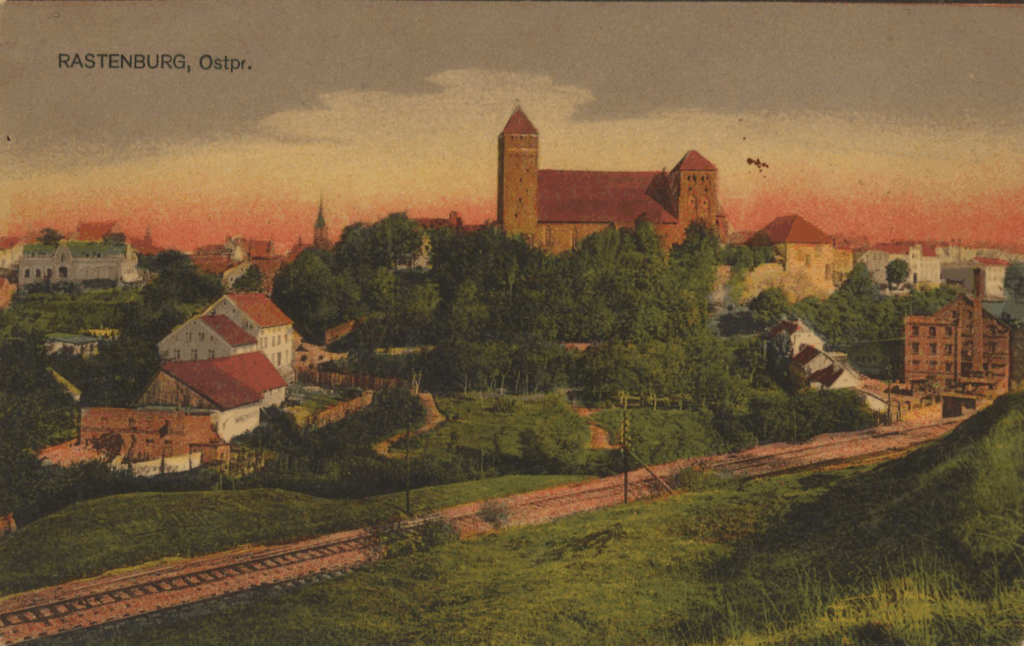
The Teutonic Order, which took control of these areas, brought German settlers who began to shape a new character of the region. In 1357, the Teutonic Knights founded Rastenburg (today Kętrzyn), which became an important administrative and trade center. Over the following centuries, the city and surrounding lands were influenced by German culture, language, and tradition. After the secularization of the order in 1525, the Duchy of Prussia became a Lutheran state, which also influenced the lives of its inhabitants. After the partitions of Poland, Prussia became part of the Kingdom of Prussia and then the German Empire. For centuries, German language and culture dominated the region, although other communities also existed.
Jewish Community of Ketrzyn
Jews began to settle in Ketrzyn in the 17th century, and their community gradually grew. In the 19th century, Ketrzyn had a developed Jewish community, whose members were mainly engaged in trade, crafts, and banking. In 1853, a synagogue was built, and Jewish cultural and social organizations operated in the city. However, after the Nazis came to power in Germany, the situation of Jews deteriorated significantly. In 1938, during Kristallnacht, the synagogue in Ketrzyn was burned down, and Jews began to be persecuted. During World War II, almost the entire Jewish community of Ketrzyn was murdered as part of the Holocaust.
Poles in Prussian lands
Despite German domination, Polish culture was present in the region, especially in the border areas and in Masuria. Masurian people lived in East Prussia, who spoke Polish and were associated with Polish folk culture. After the end of World War II and the change of borders, Kętrzyn found itself within the borders of Poland. Most of the German population was displaced, and Poles came to replace them – both repatriates from the Eastern Borderlands and those resettled from other regions of the country.
Thanks to the presence of different nationalities, Kętrzyn and its surroundings had a complex history, in which Prussian, German, Jewish and Polish influences clashed. Each of these communities left a mark on the architecture, culture and traditions of the city, creating its multicultural heritage.